
Jensen Huang resigns as Nvidia CEO
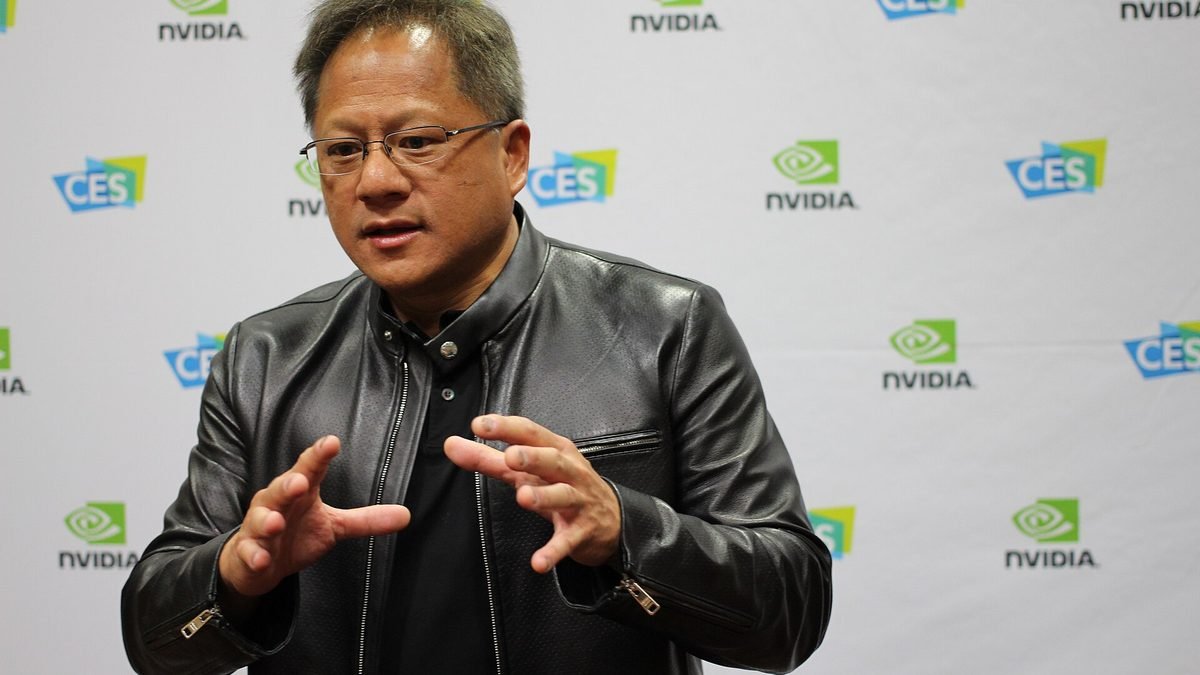
The most valuable chip company in the AI boom lost the only CEO it has ever had on Thursday.
Nvidia's board announced that Jensen Huang had resigned as president, chief executive and a member of the board, effective immediately, according to a company news release. A regulatory filing with the Securities and Exchange Commission says the board accepted the resignation on Wednesday, Nov. 11. A company spokesperson told NBC News that Huang will not work with Nvidia in any capacity going forward.
Who is running Nvidia now
Colette Kress, Nvidia's chief financial officer since 2013, will serve as interim CEO and keep her CFO job until a permanent successor is named, the company said. The board is searching for a new chief executive and will look at both internal and external candidates.
The board also named Harvey C. Jones its first-ever chair. Jones, 73, has been an Nvidia director since 1993 and is a former CEO and executive chairman of chip-design software maker Synopsys, according to the filing and the release.
"The Board has full confidence in Colette and the leadership team, and we expect the company's operations, customer commitments and product roadmap to continue without interruption," Jones said in the release. Kress said in the same release that she is "committed to building on the extraordinary foundation Jensen created over the last 33 years."
In an email to employees obtained by CNBC, Kress wrote that "this has been an extraordinarily difficult period" and said the company will hold an all-hands meeting on Nov. 18. Jones's own staff email, also published by CNBC, said, "Jensen's contributions to NVIDIA are profound." The board's public statement did not address the reports that led to the resignation, The Guardian noted.
What led to the resignation
Huang's exit caps a week of escalating reports about his private life. Earlier this week, Nvidia's board hired the law firm Wachtell, Lipton, Rosen & Katz to conduct what it called a "thorough and independent" investigation into Huang's relationship with Alice Huang, an Nvidia customer and Chinese citizen who is not related to him, The Guardian reported. Nvidia had earlier denied anything unusual about that relationship.
On Sunday, Huang admitted he had been unfaithful to his wife, Lori, without naming Alice Huang, according to The Guardian. The same day, the board said it was looking into reports that he was the target of a foreign intelligence effort. The law firm had told Huang to stay in his role while the investigation continued.
Alice Huang heads the Singapore-based data center company Megaspeed. U.S. intelligence agencies suspect she is a Chinese asset, according to multiple news reports, including in The New York Times. China has denied the spying allegations, and Jensen Huang has denied knowing of any alleged work she did for the Chinese government.
Late Wednesday, The New York Times reported a second alleged extramarital relationship, this one with Kimberly Powell, Nvidia's vice president of healthcare, who reported to Huang. The Times reported the two were captured on video being affectionate at a hotel during a company conference in March. NBC News said it had not independently verified the Times report, and The Guardian said Powell had been approached for comment. Nvidia's board met late Wednesday to discuss Huang's future.
How the stock reacted
Nvidia shares fell as much as 14% on Thursday, to as low as $148.80, CoinDesk reported, before recovering part of the drop. Nvidia shares closed Thursday at $166.19, down 4.34% from Wednesday's close of $173.73, according to Yahoo Finance.
The Guardian, citing morning trading, said the decline had erased more than $320 billion of Nvidia's market value on the day and more than $600 billion over the week, leaving the company worth about $3.9 trillion at that point. Reuters reported that AMD and Broadcom, two Nvidia rivals, were each up about 6%.
Huang owns more than 870 million Nvidia shares, about 3.6% of the company, a stake Bloomberg valued at about $145 billion Thursday morning, according to The Guardian. Reuters called him Nvidia's fourth-largest shareholder.
Who could be next
No successor has been named. Investors and analysts have pointed to Kress and Ian Buck, who oversees Nvidia's AI hardware and software products, as leading internal candidates, Reuters reported. Outside names floated in news coverage include former Apple CEO Tim Cook, Arm CEO Rene Haas and AMD CEO Lisa Su, according to The Guardian. President Donald Trump wrote on social media Thursday that Cook should get the job, The Guardian reported.
More business coverage: our story on Oracle breaking ground on its East Bank campus in Nashville and the rest of Midstate Daily's business news.
Sources
- NVIDIA Newsroom: NVIDIA Announces CEO Transition (Nov. 12, 2026)
- NVIDIA Corp. Form 8-K filed with the SEC (Nov. 2026)
- The Guardian: Jensen Huang resigns as Nvidia CEO after alleged affairs (Nov. 12, 2026)
- Associated Press: Jensen Huang steps down and Nvidia sell-off continues (Nov. 12, 2026)
- Reuters via Investing.com: Nvidia CEO Jensen Huang resigns, in blow to AI boom he helped foster (Nov. 12, 2026)
- CNBC: Here's what Nvidia interim CEO Colette Kress and board chair Harvey Jones wrote to Nvidia employees (Nov. 12, 2026)
- NBC News: Nvidia CEO Jensen Huang resigns after reports of affair and extramarital relationships (Nov. 12, 2026)
- CoinDesk: Nvidia shares plunge as Jensen Huang resigns (Nov. 12, 2026)
- Yahoo Finance: NVIDIA Corporation (NVDA) quote, Nov. 12, 2026 close