
U.S. loses measles-free status. What it means here
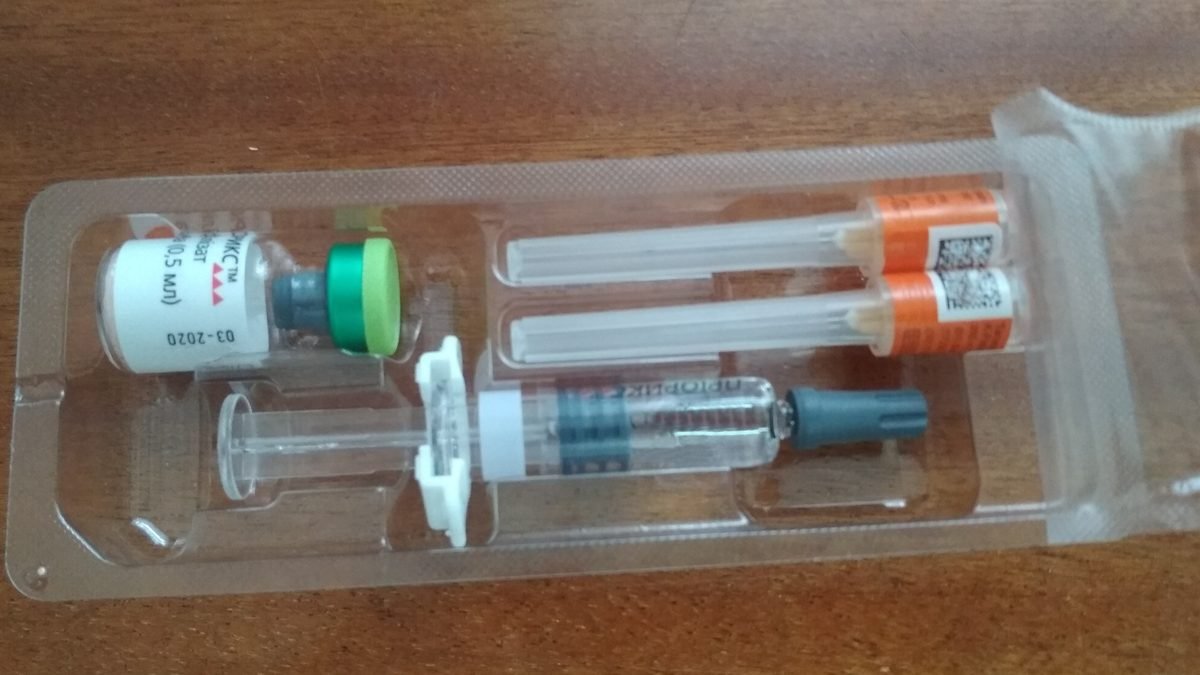
The United States is no longer considered free of endemic measles, the Pan American Health Organization and the Centers for Disease Control and Prevention said Tuesday.
PAHO's independent Measles and Rubella Elimination Regional Monitoring and Re-Verification Commission met Nov. 10-13 and concluded that the same measles virus genotype and lineage had circulated in the U.S. without a break for at least 12 months. PAHO Director Dr. Jarbas Barbosa accepted the commission's report and notified U.S. health officials. CDC issued a joint statement the same day saying it is committed to stopping outbreaks and regaining the designation.
The U.S. first achieved measles elimination status in 2000 and held it until this year. The outbreak that triggered the change began on Jan. 20, 2025, and the 12-month threshold was reached on Jan. 20, 2026, according to PAHO. The formal loss of verification was announced Tuesday, after the commission's annual review.
PAHO was careful to say what the change does and does not mean. It does not mean every part of the country is in an outbreak, and it does not mean the U.S. has lost the ability to control measles. It does mean the virus became established in sustained domestic transmission for a year or more, which the agency called a significant public health setback.
Mexico and Bolivia also lost their national elimination status in the same review. The Region of the Americas, which first eliminated measles in 2016 and regained that regional status in 2024, already lost its regional verification in November 2025 after prolonged transmission in Canada.
The national numbers
As of Nov. 12, CDC had confirmed 5,412 measles cases in the United States in 2026, reported by 47 jurisdictions including Tennessee, plus 18 cases among international visitors. That is already well above the 2,289 confirmed cases recorded in all of 2025. CDC said 43 outbreaks have been reported this year, and 96% of confirmed cases are outbreak-associated.
According to CDC figures compiled by the American Academy of Pediatrics, about 11% of this year's cases, or 591 people, have been hospitalized. CDC has confirmed 6 measles deaths in 2026, a number the agency says may change as reviews continue. About 96% of this year's cases were in people who were unvaccinated or whose vaccination status was unknown.
Tennessee and Nashville
Tennessee is not among the states with the largest outbreaks, but case counts here have also risen. The Tennessee Department of Health had recorded 11 confirmed measles cases statewide in 2026 as of Friday, WSMV reported, three more than in all of 2025, when the state had 8. Tennessee reported no measles cases from 2020 through 2023.
The Tennessean, citing TDOH as of Nov. 6, said seven of the 11 cases were in East Tennessee, with the rest in the Memphis area, the Mid-Cumberland region and the Nashville area. Officials said 64% of the state's cases involved unvaccinated people. Three patients had received two doses of the measles, mumps and rubella (MMR) vaccine, and one patient's vaccination status was unknown. Seven of the cases were in adults ages 18 to 49, three were in children ages 5 to 17, and one was in an adult 50 or older.
Metro Public Health has confirmed two measles cases in Nashville this year, the first in July and the second in early November. The November case involved an unvaccinated person with recent international travel. MPHD listed seven possible public exposure sites in Davidson and Williamson counties from Oct. 30 to Nov. 3. We previously reported those locations in MPHD lists 7 Midstate measles sites.
Midstate vaccination rates
Public health agencies use a 95% vaccination coverage target as the level generally needed to prevent measles from spreading easily in a community. Tennessee's latest kindergarten immunization report, covering the 2025-26 school year, shows the state and all five Midstate counties remain below that mark for students who were fully immunized with all required kindergarten vaccines.
Statewide, 92.5% of kindergartners were fully immunized, essentially unchanged from 92.3% the year before. Documented exemptions rose to an all-time high of 7.5%, driven largely by religious exemptions, which increased from 3.5% to 4.6%. Only 17% of Tennessee counties (16 of 94 reporting) reached the 95% fully immunized goal.
MMR coverage specifically was a little higher than the all-vaccine rate: 94.4% of kindergartners were complete for the measles, mumps and rubella series, still short of 95%.
Among the five Midstate counties, TDOH reported these fully immunized rates and religious exemption rates for 2025-26:
- Davidson County: 92.9% fully immunized, 3.7% religious exemption
- Rutherford County: 92.3% fully immunized, 5.1% religious exemption
- Sumner County: 91.8% fully immunized, 7.2% religious exemption
- Wilson County: 91.6% fully immunized, 7.4% religious exemption
- Williamson County: 87.7% fully immunized, 11.1% religious exemption
Williamson County had the lowest fully immunized rate of the five and is below 90%, a level TDOH says can make it easier for a highly infectious disease like measles to spread among unvaccinated students if it is introduced in a classroom.
Symptoms and what to do
Measles is one of the most contagious human viruses. PAHO notes that one infected person can spread it to as many as 18 people who are not immune. It spreads through the air when someone coughs or sneezes, and Metro Public Health says you can get measles from being in a room where an infected person has been, even up to two hours after they have left.
According to MPHD and CDC, symptoms often appear 7 to 14 days after contact and can include a high fever that may spike above 104 degrees, cough, runny nose, red watery eyes, and a rash. Serious complications can include pneumonia and encephalitis.
If you think you or your child may have measles, or may have been exposed, contact a health care provider or your local health department and watch for symptoms.
Where to get an MMR shot
The CDC says two doses of the MMR vaccine are about 97% effective at preventing measles, and one dose is about 93% effective. CDC Director Dr. Erica Schwartz, in Tuesday's joint statement, said vaccination, not the elimination designation, is what protects people, and that CDC will keep working to close immunity gaps.
MMR shots are widely available from health care providers and many pharmacies. They are also offered at local health departments across the Midstate.
In Davidson County, Metro Public Health offers MMR at its three preventive health clinics. Appointments are recommended. Walk-ins may be seen as staffing allows if you sign in by 2:30 p.m. Clinic locations are:
- Lentz Public Health Center, 2500 Charlotte Avenue, 615-340-5667
- East Public Health Center, 1015 E. Trinity Lane, 615-862-7916
- Woodbine Public Health Center, 224 Oriel Avenue, 615-862-7940
More information is on Metro Public Health's measles and immunization pages. Eligible children may qualify for federally funded vaccine through the Vaccines for Children program; Metro charges an administration fee that can be adjusted based on income.
County health departments also provide routine immunizations. Call for an appointment:
- Williamson County: Franklin Clinic, 1324 W. Main Street, 615-794-1542; Fairview Clinic, 2629 Fairview Boulevard, 615-799-2389
- Rutherford County: Murfreesboro, 100 West Burton Street, 615-898-7880; Smyrna, 108 David Collins Drive, 615-355-6175
- Sumner County: Gallatin Clinic, 1005 Union School Road, 615-206-1100; Portland Clinic, 214 West Longview, 615-325-5237. The Hendersonville clinic is temporarily closed.
- Wilson County: 927 E. Baddour Parkway, Lebanon, 615-444-5325
How the U.S. can get the status back
To be considered for re-verification, PAHO says a country must show that it has interrupted endemic transmission for at least 12 consecutive months and strengthened the systems that keep measles from getting established again, including high vaccination coverage, stronger surveillance and a corrective action plan. The regional commission then reviews the evidence and makes a recommendation to the PAHO Director.
Brazil lost its measles elimination status in 2019 and regained it in November 2024 after interrupting endemic transmission, PAHO said, a reminder that the designation can be won back.
For more Midstate health coverage, see our earlier report on Nashville's November measles exposure sites and news from Davidson, Williamson, Rutherford, Sumner and Wilson counties.
Sources
- CDC: Joint Statement: Loss of U.S. Measles Elimination Status (Nov. 17, 2026)
- PAHO: Measles in the Americas: Questions and Answers (Nov. 17, 2026)
- PAHO: PAHO urges countries to step up efforts to stop measles outbreaks and move towards elimination in the Americas (Nov. 17, 2026)
- CDC: Measles Cases and Outbreaks (updated Nov. 13, 2026; cases as of Nov. 12)
- American Academy of Pediatrics Red Book Online: Outbreaks: Measles (Nov. 16, 2026)
- Tennessee Department of Health: Kindergarten Immunization Compliance Assessment Report, 2025-2026 school year (August 2026)
- WSMV: Tennessee sees record number of measles cases for second year in a row (Nov. 16, 2026)
- The Tennessean: Tennessee reports 11 measles cases in 2026 (Nov. 9, 2026)
- Metro Public Health Department: Measles Information
- Metro Public Health Department: Immunization Program
- Williamson County Health Department: Clinics
- Rutherford County Health Department
- Sumner County Health Department
- Wilson County Health Department
- KFF: Measles Elimination Status: What It Is and How the U.S. Lost It (updated Nov. 17, 2026)